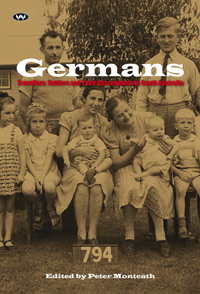

Germans: Travellers, Settlers and Their Descendants in South Australia

Book Cover: Germans: Travellers, Settlers and Their Descendants in South Australia
Editions:Paperback
ISBN: 9781862549111
Size: 160.00 x 235.00 mm
Pages: 472

From Beehive Corner and Bert Flugelman's polished balls in Rundle Mall to the vineyards, churches and cemeteries of the Barossa Valley, tangible signs of South Australia's Germans are everywhere to be seen. Too often, however, 'the Germans' are regarded as a single group in the state's history. The truth is more complex and intriguing.

Those who came during the colony's first decades mostly spoke a common language, but were divided by differences of country, culture and class. They were farmers from Silesia and Brandenburg, missionaries from Dresden, liberals from Berlin, merchants from Hamburg, miners from the Harz mountains or erudite graduates from some of the best universities in the world. They brought an astonishing variety of knowledge and talents, and were destined to make a difference in many fields.

No less varied have been the experiences of their descendants and more recent arrivals. Germans have been praised as model citizens, even as over-achievers. But at times they have also been accused of divided loyalties or barefaced treachery.

The essays gathered here explore the multiple origins, experiences and contributions of Germans in South Australia over some 175 years. Part celebration and part sober assessment, this book helps make sense of South Australia today.

Published:
Publisher: Wakefield Press
Reviews:Heidi Ing, Transnational Literature wrote:

This publication goes a long way in providing those of us who have lost touch with our heritage a more complete picture in which to see ourselves and the experiences of South Australians of German origin.

Oliver Haag, Reviews in Australian Studies wrote:

The book constitutes a meticulously researched source for everyone interested in the intricate relationship between Germany and (South) Australia. The clear style and absence of jargon as well as the breadth of themes render Germans: Travellers, settlers and their descendants in South Australia a worthwhile compendium for scholars and general readers alike.
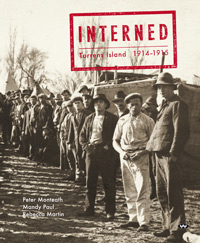

Interned: Torrens Island 1914-1915

Book Cover: Interned: Torrens Island 1914-1915
Editions:Paperback
ISBN: 9781743053386
Size: 218.00 x 265.00 mm
Pages: 128

In August 1914 war broke out across Europe. Within months hundreds of men - 'enemy aliens' - were interned on Torrens Island, in the Port River estuary near Adelaide. Sailors taken off enemy ships, foreign nationals living in South Australia, and even some naturalised British subjects found themselves behind barbed wire.

Wartime censorship meant people outside knew next to nothing about internment or life in the camp. The camp commandant's brutal behaviour was revealed only years later.

Today, the observations of two internees survive in the diaries of professional boxer Frank Bungardy and the compelling photographs of Paul Dubotzki. These extraordinary sources, brought together in Interned, tell the little-known story of South Australia's 'enemy within' - a story as timely now as it has ever been.

Published:
Publisher: Wakefield Press
Reviews:Kate Hunter, Australian Historical Studies wrote:

Such subversion makes this book fascinating, along with the biographies of several men held on Torrens Island that reveal the practice of deportation, separation from wives and children, sometimes forever, and men who surrendered themselves to internment because war had rendered them unemployable and they faced destitution.

Trevor Grant, Bilbiofile wrote:

An impressive exploration of an easily neglected dark but intriguing chapter in South Australia's history ... [The authors] have done their subject proud through their scholarly, ground-breaking research and the impressive presentation of illuminating photographs.

Nic Klaasen, Flinders Ranges Research wrote:

A lasting record of one easily neglected aspect of South Australia's experience of the Great War ... A story as timely now as it ever was.

Ian Harmstorf, Journal of the Historical Society of South Australia wrote:

For all those interested in the history of South Australia or the reaction of human beings to pressure, both internal and external, this book is one that will fascinate and reward from beginning to end.

Raelke Grimmer, Transnational Literature wrote:

Interned: Torrens Island 1914-1915 presents the reader with an otherwise hidden piece of South Australian history. Monteath, Paul and Martin respectfully capture the experiences of the internees through the internees' own eyes, shading in gaps with historical context to give the reader a rich understanding of the circumstances surrounding Torrens Island.


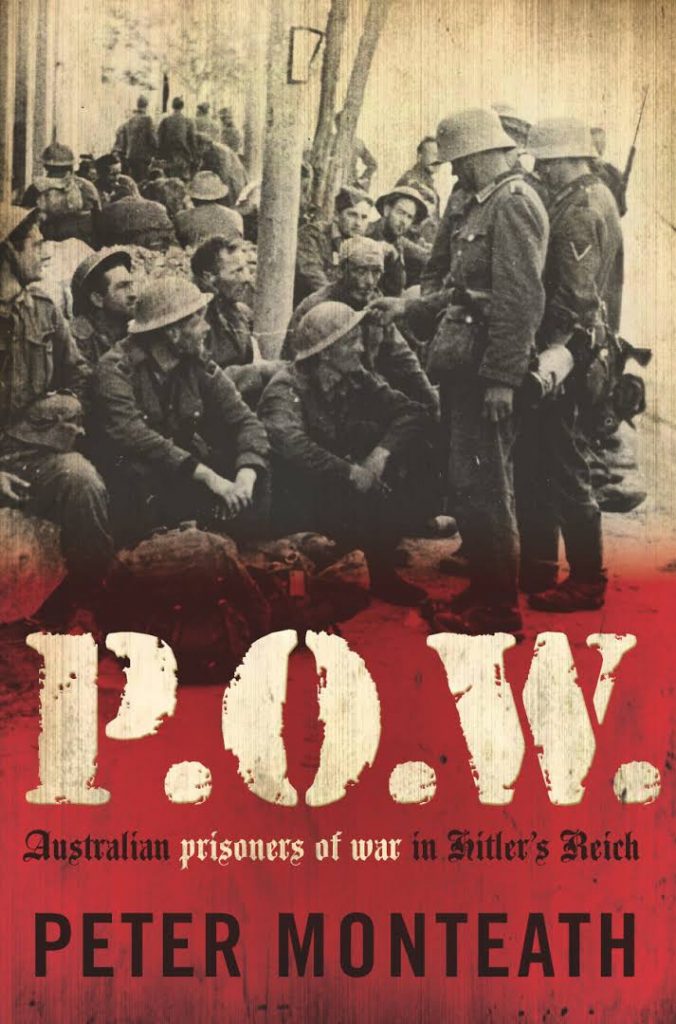
POW: Australian Prisoners of War in Hitler’s Reich

Book Cover: POW: Australian Prisoners of War in Hitler's Reich
Editions:Paperback
ISBN: 1742610080
Size: 156.00 x 235.00 mm
Pages: 523

Australians from every field of conflict in World War II found themselves as prisoners in Hitler's notorious Stalags, or prisoner of war camps. Whether captured merchant seamen, bomber crews or soldiers taken in North Africa or the disastrous Greek and Cretan campaigns, they were to see out the war in the heart of Hitler's Europe, their fortunes intimately connected to the fortunes of the Reich.

Most were forced to labour in factories, down mines or on the land – often in conditions of enormous privation and hardship. All suffered from shortages, overcrowding and the mental strain of imprisonment. Some tried to escape, a few successfully, a few paying with their lives. The experiences of Australian POWs in Germany have long been overshadowed by the horrors of Japanese imprisonment, yet their stories of courage, stoicism, suffering and endurance deserve to be told.

Peter Monteath's fascinating narrative history is exhaustively researched, and compelling in its detailed evocation.

Published:
Publisher: Macmillan Australia
Reviews:Peter Pierce, Australian Book Review wrote:

Hypertension, alcohol and tobacco addiction, impotence and diarrhoea, the loss of the art of working for a living, were - Monteath contends - nearly as likely to afflict those who had been prisoners of the Germans as of the Japanese. Some suffered from a "tormenting restiveness"; others preferred the "silent world of retreat into their memories". Monteath concludes POW with a salute to the few hundred of them still alive. His book has already paid them a nuanced, richly detailed tribute.

Emma Morris, The Australian wrote:

Not only is it about time that a book on this subject has been published but Monteath has delivered one that will become the leading authority on the subject and essential reading for all researchers of Australian PoWs of Hitler's Reich.

William Charles in The Adelaide Review wrote:

Notwithstanding the awful context of the broader European conflict, these pages resound with echoes of a more innocent and respectful time, where officers on both sides were gentlemen and played largely by the rules. How distant all this seems from our contemporary regimes of extraordinary rendition and torture. Flinders University's Peter Monteath has produced an outstanding book highly recommended for any student of Australian history, or for lovers of true adventure.

Bob Moore, War in History wrote:

In sum, this is a well-constructed history that tells us as much about the general experience of western prisoners of war in German hands as it does about those of the Australians. Most of this has been covered in other texts but this has a highly readable style that will make it accessible to a readership beyond the realm of academia. That said, its greatest appeal is likely to be the wider Australian public - exactly as the author intended.

Stefan Geck, H-Net Reviews wrote:

In a lively and knowledgeable manner, the author of this book traces the history of the Anzacs, soldiers of the Australian and New Zealand Army Corps, who went into German captivity in the European theatre of war between 1939/40 and 1945. Against the background of the history of the Second AIF (Australian Imperial Force) and the units of Air Force (RAAF) and Navy (RAN), all of which were deployed in the fight against the Third Reich under British High Command, Peter Monteath exhaustively documents the history of war imprisonment in its central aspects. By evaluating numerous interviews with war veterans, he manages to present more than just another "story from below".


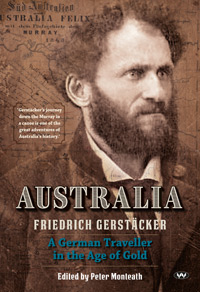
Friedrich Gerstäcker, Australia: A German Traveller in the Age of Gold

Book Cover: Friedrich Gerstäcker, Australia: A German Traveller in the Age of Gold
Editions:Paperback
ISBN: 9781743054192
Size: 156.00 x 234.00 mm
Pages: 320

Friedrich Gerstäcker, the most illustrious and prolific of German travel writers, set foot in Australia in March 1851, having walked across the Andes, traipsed the goldfields of California, and sailed over the Pacific in search of new adventures.

Gerstäcker found adventures aplenty in Australia. He rowed and trekked down the Murray, absorbed the excitement triggered by the discovery of gold, visited his countrymen in South Australia, and trained his outsider's eyes on a colonial society gripped by profound change.

In this translated edition of Gerstäcker's book Australien, his lively travelogue is made available for the first time in English. Rarely has Australia's colonial past been presented with such insight, humour and entertainment.

Published:
Publisher: Wakefield Press
Reviews:Christopher Menz, Australian Book Review wrote:

Well worth reading, both for its account of colonial Australia and for the author’s engaging style.

Nick Mattiske, Inside Story wrote:

A travel writer with a wit to rival Bill Bryson.

Mary Ann Elliott, The Chronicle, Toowoomba wrote:

A chronicle of Australia’s rip-roaring colonial days, Gerstäcker's lively account of Sydney Town as cartloads of men and their equipment made their way to the goldfields is written with humour and insight and gives a vivid image of those times. Here is a fascinating account of what this huge country was like then with all its dangers, delights and curiosities.

Katherine M Reynolds, Journal of the Royal Australian Historical Society wrote:

Professor Monteath's book is well referenced and intelligently edited and makes a serious contribution to a scholarly analysis of Australian life through German eyes in the 1850s. A thoroughly readable and enjoyable book.

Nic Klaassen, Flinders Ranges Research wrote:

Gerstäcker's Australien offers drama, humour, suspense, excitement and a heightened sense of the exotic. Yet amid the exotic - and perhaps this feature lay at the core of Gerstäcker's genius - there was also and always the reassuringly familiar. Whether he was describing the Australian bush or the jungle of Brazil, a small piece of Germany was never far away. No other author united the familiar and the exotic as successfully as Gerstäcker did.


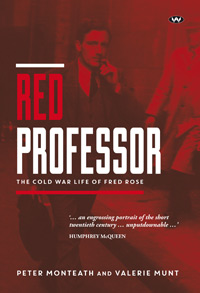
Red Professor: The Cold War Life of Fred Rose

Book Cover: Red Professor: The Cold War Life of Fred Rose
Editions:Paperback
ISBN: 9781743053720
Size: 160.00 x 234.00 mm
Pages: 400

Red Professor is an engrossing portrait of the life of anthropologist, communist and spy Fred Rose. Drawn from confidential files of ASIO and the Stasi, as well as the memories of those who knew him, the book traces Rose's humble beginnings in wartime Britain to Australia where Rose chose to pursue his passion for anthropology. Rose's fieldwork on remote Groote Eylandt forced a fundamental rethinking of how indigenous Australians should be understood and treated. His sympathy with the plight of Aborigines triggered and sustained Rose's second great passion, Communism.

In 1954, Rose was implicated as a Soviet spy in the Petrov Affair. Unable to distance himself from the sensational headlines and overwhelming suspicions, Rose and his family moved to East Germany where he lived out his final days under the employ of the Stasi.

The book was shortlisted for the Prime Minister's Literary Awards in 2016.

Published:
Publisher: Wakefield Press
Reviews:Judges, Prime Minister's Literary Awards wrote:

As a result of thorough and relentless research, including access to ASIO files and the Stasi files of East Germany's notorious secret police, Peter Monteath and Valerie Munt have produced an engrossing biography of radical anthropologist and communist Fred Rose.

Red Professor traces Rose's life from his birth in South London during the Great Depression to his death in East Berlin shortly after the Wall came down. This biography is an extremely revealing portrait of much of the 20th century as seen through communist eyes. It also uncovers gripping details about a political and scientific activist from the time he joined the Communist Party of Australia in 1942, largely because of what he perceived as the gross abuse of Aboriginals.

Sheila Fitzpatrick, Australian Book Review wrote:

The collapse of the GDR in 1989 appalled him, and he died in 1991, leaving what he saw as his magnum opus largely unpublished. How good an anthropologist he was remains unclear from this judicious and well-researched biography, but most other things the reader might want to know are in there.

Toby Boramon ,The Journal of Pacific History wrote:

Overall, this sweeping biography brings to life the global Cold War context, the paranoia on both sides and how this affected one man and his family, as well as anthropological studies of Aborigines. The biography flows excellently. The authors note that the breadth of the subjects they covered in their biography placed them, at times, outside their intellectual comfort zones. They are to be congratulated for weaving together many different subjects. We need more interdisciplinary books with such a broad, global focus, which would highlight the many ways in which the Pacific is interconnected with the rest of the world.

John Moses, Honest History wrote:

The authors, by their timely research, have placed in their debt not only the anthropological community but also all historians of contemporary Australia and those who remember the chilling time of the Cold War. One can only wish this considerable work the widest publication.

Nicole Moore, Australian Literary Studies wrote:

The authors bring to our attention the extraordinary and complex back story of this now little-remembered nbame, and restore to some contemporary clarity the political stakes at issue in mid-century contests over academic and other forms of cultural authority. In particular, this book reminds of the length and difficulty of the struggle for Land Rights and cultural autonomy for Indigenous communities, and sheds new light on the contests within and outside professional anthropology that played out in cold-ear configurations of Indigenous rights, across the political spectrum, and their influence on post-war culture.

Nicolas Rothwell, The Australian wrote:

Rose has been effectively written out of the intellectual history of Australia despite the emblematic nature of his fate. The anthropological establishment preserves practically no memory of his pioneering work on Groote Eylandt in the 1930s; the radical intelligentsia whose circles he once frequented have long since moved on from the concerns that shaped his life. There is a reason for this neglect, a single, all-dominating reason: the episode that lies at the heart of the subtle new biography of Rose by Flinders University history academics Valerie Munt and Peter Monteath.

Melinda Hinkson, Arena wrote:

Red Professor provides a fascinating glimpse of the interpersonal workings of espionage, of the intimacy between informant and handler - in Rose's case a relationship more committed and more openly communicative than that between husband and wife.

Donald Denoon, Labour History wrote:

The book opens in 1976 at a dinner in East Berlin with Gough Whitlam and his entourage reminiscing with Fred and Edith about Australian politics, Aboriginal land rights - and their shared bete noir Sir John Kerr! After a delightful evening Fred reported their conversation in full, to his Stasi handlers. The authors ask, "What kind of man would do that?" By the end of this wonderfully researched account, we can answer that question and - almost - understand how Fred Rose became that man.

Robert Tonkinson, Anthropological Forum wrote:

The cover blurb quotes Humphrey McQueen describing this very well researched and referenced biography as "unputdownable"; indeed, it is an engrossing read.

Christine Nicholls, The Conversation wrote:

A vivid, comprehensively researched and engrossing study of a man whose objective to research Aboriginal life and culture thoroughly and sensitively was thwarted at every turn by authorities wedded to an "assimilationist" policy or who found his leftist politics repugnant or distasteful. As an academic working in Australian studies, this book spoke to me both professionally and personally.

Ulf Morgenstern, Das Historisch-Politische Buch wrote:

...their book is a scholarly achievement of the first order, deserving of recognition on more than one continent.

Charles Gent, InDaily wrote:

Few people can have a CV to rival Fred Rose's: Cambridge University graduate, remote area meteorologist, anthropologist, alleged Soviet spy, eminent East German academic and Stasi informant.

Nic Klaassen, Flinders Ranges Research wrote:

A remarkably informative and at the same time easy to read biography ... Everyone interested in recent world and Australian history should have a copy.

Patricia Sumerling, Historical Society of South Australia newsletter wrote:

I always like a good spy story and couldn't put this book down ... a tale well told with the evidence of weighty research.

Maurie O'Connor, Food, Wine, Travel wrote:

The level and depth of research undertaken by Monteath and Munt in this biography is astounding and their narrative is masterly and captivating. This is not a dry academic treatment of the subject but a very readable and entertaining story of a man of intelligence, character and a fair share of human failings.

Mary Ann Elliott, The Chronicle, Toowoomba wrote:

A gripping and often chilling account of this chameleon-like man, set in a sweeping backdrop of the 20th century.

Linda Guthrie, ReadPlus wrote:

A real treat for those interested in more about those heady times during the Cold War and the Petrov Affair.


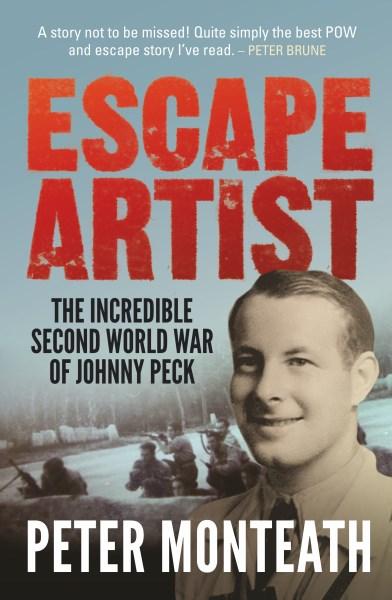
Escape Artist: The Incredible Second World War of Johnny Peck

Book Cover: Escape Artist: The Incredible Second World War of Johnny Peck
Editions:Paperback
ISBN: 9781742235509
Size: 153.00 x 234.00 mm
Pages: 328

The never-before-told story of World War II escape artist extraordinaire, Johnny Peck.

In August 1941, an eighteen-year-old Australian soldier made his first prison break – an audacious night-time escape from a German prisoner-of-war camp in Crete. Astoundingly, this was only the first of many escapes.

An infantryman in the 2/7 Battalion, Johnny Peck was first thrown into battle against Italian forces in the Western Desert. Campaigns against Hitler's Wehrmacht and Luftwaffe in Greece and Crete followed. When Crete fell to the Germans at the end of May 1941, Peck was trapped on the island with hundreds of other men. On the run, they depended on their wits, the kindness of strangers, and sheer good luck.

When Peck's luck ran out, he was taken captive by the Germans, then the Italians. Later, after his release from a Piedmontese jail following the Italian Armistice of 1943, and at immense risk to his own life, Peck devoted himself to helping POWs cross the Alps to safety. Captured once more, Peck was sentenced to death and detained in Milan's notorious, Gestapo-run San Vittore prison – until escaping again, this time into Switzerland.

Historian Peter Monteath reveals the action-packed tale of one young Australian soldier and his remarkable war.


British Edition

Published: 3 July 2018
Publisher: Pen & Sword

Published:
Publisher: NewSouth Publishing
Reviews:Janet Mawdesley, Blue Wolf Reviews wrote:

His story remained largely untold until after his death in 2002, but thanks to the efforts of Peter Monteath this remarkable story about a young man of great determination and courage, lives on to become one of the many that go to make up the remarkable history, of not just Australian fighting forces overseas, but also reminds us of the caring and courage displayed by ordinary people when faced with extraordinary events in their lives.

Troy Lennon, Daily Telegraph wrote:

You may not know the name of Johnny Peck, but that needs to change right away. If you love a good World War II history book, then this is the story for you. If you just enjoy real life adventure yarns, this one will have you hooked from the beginning.

Bill Rudd, Sabretache wrote:

Peter Monteath helps to explain the political atmosphere within which Johnny Peck was forced to work. His story of Peck the Escape Artist is a very considerable aid to those who are interested in the events in North Italy in the latter years of World War II as well as the Australian European POW story in general. John Peck’s story is indeed that of a great AIF escaper.

Kristen Alexander, History Australia wrote:

Escape Artist presents the full extent of Peck’s career, and pays tribute to it. It highlights that altruism among friends and allies is more important than self-interest or individual liberty. Peter Monteath’s very readable account reveals that Peck’s war was more than ‘incredible’. It was one of great courage, gallantry and singular achievement.

Andrew McDonald, Wartime wrote:

This is certainly a book addressed at the popular market, but it is the work of a professional historian. The many individual stories are deftly set against the wider movements of the war and told with a keen sympathy for those on whose lands the war was being fought.